Bringing an Interior Designer Into a Custom Home — The Right Way
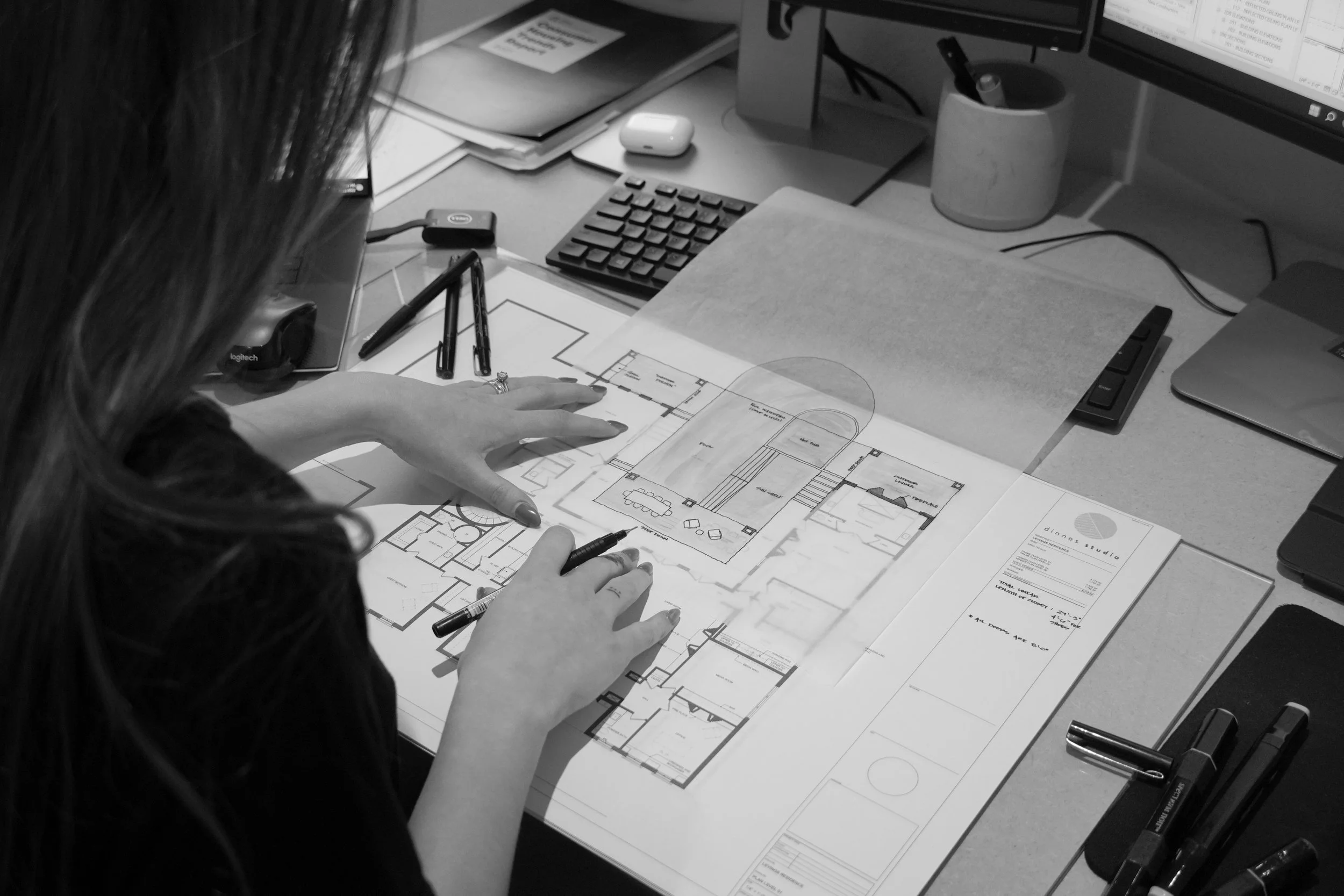
On every custom residence, the same question comes up: when do we bring in the interior designer?
The answer shapes the whole project. Here’s how we think about it.
Early is better than late.
The strongest projects bring the designer in at schematic design — not after permits. Ceiling heights, lighting, millwork, and finishes are one decision, not two. A designer who arrives after the drawings are locked is inheriting conditions, not shaping them.
Draw the boundary before design begins.
Architect owns what’s fixed to the building — cabinetry, trim, tile, plumbing fixture locations, built-ins, lighting layout, fireplace, stairs.
Designer owns what’s movable or applied — furniture, rugs, drapery, wallpaper, paint, decorative lighting, art.
Shared zones — kitchens, primary baths, fixtures — are a true collaboration, with the architect holding final authority on anything that ends up in the drawings.
Someone has to own the integrated whole. That’s the architect.
One coordination channel.
Architect, designer, and client in the same room. Decisions documented. No parallel conversations drifting apart in the background.
Respect the design sequence.
Schematic, design development, construction documents. Interior selections layer in at specific phases. A designer fluent in that rhythm strengthens the work. One who isn’t pulls the project backward.
Hire designers who’ve done it before.
Ask about experience working from architectural drawings, attending consultant meetings, and holding selections to a drawn set. Specific answers mean specific experience.
One house, not two.
A great custom home doesn’t read as “architecture with interiors laid on top.” It reads as one coherent work. That outcome isn’t accidental — it comes from the right people, brought in early, coordinated with discipline.
When clients ask us how to integrate an interior designer into their project, this is the conversation we want to have up front. The project is better for it.